
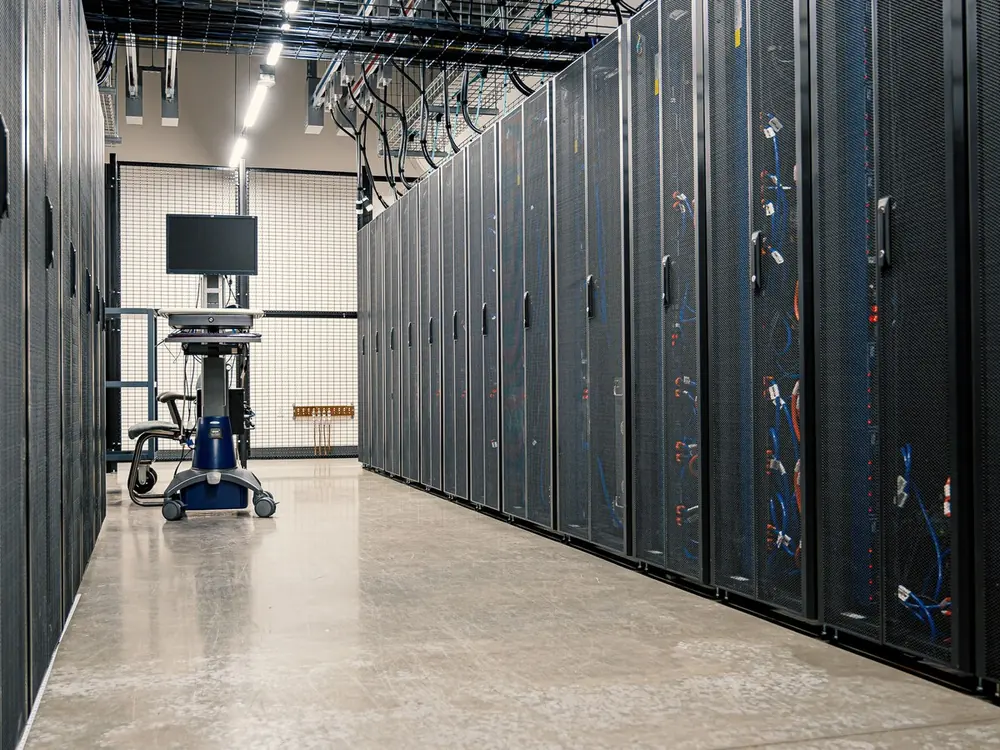
Precision cooling for server rooms and data centres.
A dropped rack-inlet temperature isn't an inconvenience — it's downtime and, potentially, data loss. Here's how we design cooling for mission-critical spaces.
Server rooms fail differently than offices
A single AC unit that's "good enough" for a normal office is rarely good enough for a server room. Rack heat loads climb as equipment is added, a single point of failure means one breakdown can take the whole room down, and during a power outage or unit failure, temperatures can spike fast enough to trigger automatic shutdowns — or damage — before anyone notices.
How we design a server-room cooling system
The same engineering-first process we use across every project, applied to mission-critical spaces.
We calculate actual rack heat output, not a rule-of-thumb estimate: accounting for existing equipment, planned expansion, room insulation, and ambient conditions.
Where uptime matters, we specify redundant units sized so that if one fails, the remaining capacity holds the room at safe temperature on its own.
Redundant units are configured to hand over automatically on failure or during scheduled maintenance, with no manual intervention needed to keep the room stable. See our HVAC controls & automation range.
Work is sequenced so live server rooms stay operational throughout: no planned downtime to get the new system in.
Built to stay reliable, not just to pass commissioning
Data centres and server rooms sit on our most frequent maintenance schedule — 12 visits a year — reflecting how little margin these spaces have for drift or neglect.
If a server-room unit does fail outside a scheduled visit, our rapid response team is dispatched immediately, day or night.
No subcontractors. The technicians who commissioned your system are the same ones who service it.









Start with a site survey.
Our engineers will assess your premises, load requirements, and constraints to recommend the exact system needed.
Request a Quote