
Commercial AC Maintenance in Kenya: What Building Owners Should Know
Updated August 2026 · Frosten Energy Solutions Engineering Team
Commercial air conditioning systems run long hours under demanding conditions, and neglected maintenance is one of the most common reasons systems lose efficiency or fail early. This guide covers what preventative maintenance should include and the signs that call for a professional inspection, for facility managers, commercial building owners, hotels, offices and institutions.
Why Preventative Maintenance Matters
Air conditioning systems lose efficiency gradually as filters clog, coils accumulate dust and components drift out of calibration — often without an obvious symptom until energy bills climb or a breakdown occurs. Preventative maintenance catches these issues early, protects the equipment investment and reduces the risk of unplanned downtime.
Filters
Dirty filters restrict airflow, forcing the system to work harder and reducing cooling capacity. Filters are one of the most frequently neglected components and among the simplest to check on a routine schedule, but replacement intervals depend on the environment and should be set by a technician familiar with your system.
Coils
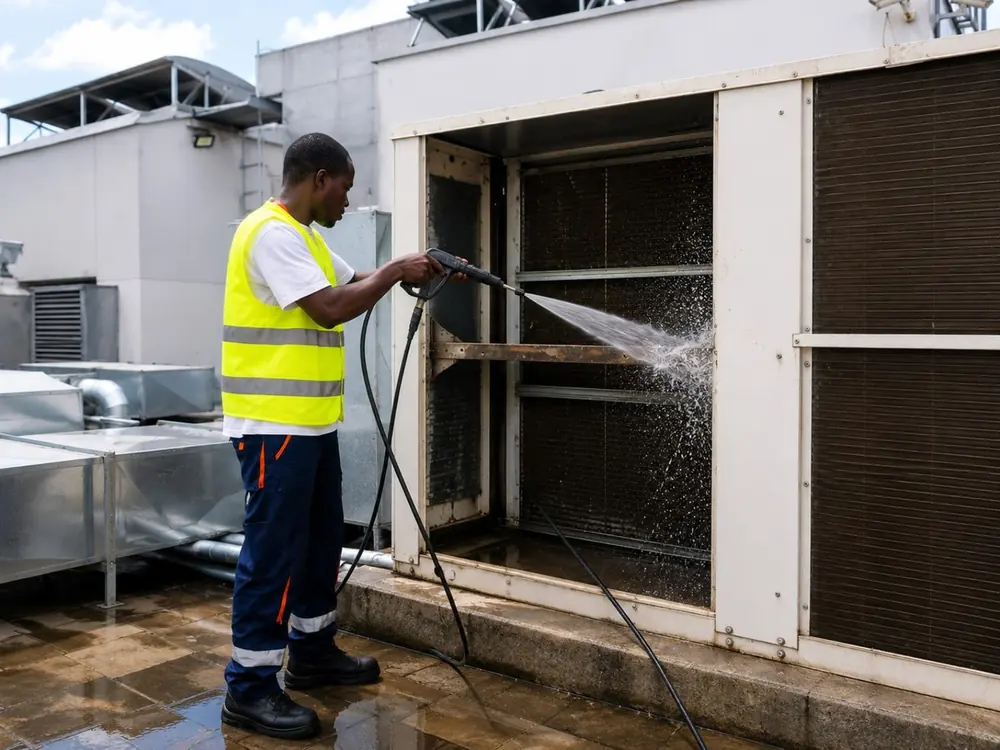
Evaporator and condenser coils accumulate dust and, on outdoor units, environmental debris over time. Dirty coils reduce heat transfer efficiency, increasing energy consumption and compressor strain. Coil cleaning is a routine part of professional servicing.
Condensate Drainage
Blocked condensate drains are a common cause of water leaks and indoor moisture issues. Routine inspection of drain lines and pans helps prevent water damage and the indoor air quality problems that come with standing moisture.
Electrical Inspection
Loose connections, worn contactors and stressed wiring are safety and reliability risks that don't announce themselves until something fails. Electrical inspection is technical work that should always be carried out by a qualified technician — it isn't something building staff should attempt themselves.
Refrigerant-Related Checks
Refrigerant charge and pressures affect both cooling performance and compressor health. Checking and handling refrigerant requires qualified, certified technicians using the correct equipment — this is not a task for untrained staff, and Frosten's technicians follow proper handling procedures on every visit.
Airflow
Blocked vents, restricted return air paths and fouled fan blades all reduce system performance even when the compressor itself is healthy. Airflow checks are part of a thorough maintenance visit and often explain uneven cooling between zones.
Controls
Thermostats, sensors and building management system integrations can drift out of calibration over time, leading to inefficient cycling or spaces that never quite reach the set temperature. Controls should be checked and recalibrated as part of routine servicing.
Abnormal Noise, Vibration & Performance
Unusual noise, vibration, or a system that runs longer than usual to reach temperature are early warning signs worth acting on rather than ignoring. These symptoms often indicate a developing issue that's cheaper to address early than after a full breakdown.
What Determines Maintenance Frequency & Scope
There's no single maintenance interval that suits every building. The right frequency and scope depend on the type of system installed, how many hours a day it runs, how heavily the space is occupied, and the surrounding building environment \u2014 a coastal or dusty site places more demand on filters and coils than a clean indoor environment. Equipment criticality matters too: a server room or operating theatre carries a different consequence of downtime than a general office, and maintenance planning should reflect that. A technician can help set a schedule around these factors rather than applying a generic interval to every system.
Maintenance Records
Keeping a record of each maintenance visit turns individual service calls into a picture of how a system is trending over time. Useful records typically cover the inspection date, any issues observed, the maintenance actually performed, faults that recur across visits, general performance observations, and any follow-up that's recommended. A recurring fault that would look minor in isolation often stands out clearly once it's visible across several visits \u2014 which is exactly the kind of pattern that points to a developing problem worth addressing before it escalates.
Catching Problems Before They Become Disruptions
The commercial case for preventative maintenance is straightforward: a technician who sees a system regularly is far more likely to notice a developing issue \u2014 a component wearing unevenly, a control drifting out of calibration, a coil fouling faster than expected \u2014 while it's still a routine fix, rather than after it has caused a breakdown during business hours. This doesn't guarantee any particular saving or extension of equipment life, and Frosten doesn't claim a fixed percentage improvement, but a documented maintenance history is one of the most useful tools a facility manager has for deciding where attention is actually needed.
Building a Maintenance Schedule
A good maintenance plan is regular and documented, not reactive.
Routine servicing intervals set to your system type and operating hours.
A record of what was inspected, cleaned and adjusted on each visit.
Extra attention before peak-demand periods when systems run hardest.
A clear process for flagging issues that need more than routine servicing.
Explore Frosten's refrigeration & HVAC services
Scheduled servicing plans covering filters, coils, controls and electrical checks. Visit Maintenance →
VRF/VRV, ducted and split systems for residential, commercial and industrial buildings. Visit HVAC Design & Installation →
Cold rooms, walk-in coolers and refrigeration equipment for Kenyan businesses. Visit Commercial Refrigeration →
More from Frosten's Guides
Commercial AC Repair vs Replacement
A decision framework for weighing repair against replacement for ageing commercial AC equipment.
VRF vs Ducted vs Split Air Conditioning
Comparing commercial HVAC system approaches for different building types.
Frequently Asked Questions
How often should a commercial AC system be serviced?
Frequency depends on system type, usage hours and environment. A technician can recommend an interval based on your specific equipment and building conditions.
Can building staff carry out AC maintenance themselves?
Basic tasks like filter checks can be part of routine housekeeping, but electrical work and refrigerant-related checks require a qualified technician and should never be attempted by untrained staff.
What are signs a system needs professional inspection?
Unusual noise or vibration, longer run times to reach temperature, uneven cooling between zones, water leaks, or a noticeable rise in energy bills all warrant a professional look.
Ready to set up a maintenance plan?
Frosten Energy Solutions offers scheduled maintenance plans to keep commercial AC systems running reliably.
See Maintenance Plans