
Kitchen Extraction & Ventilation Requirements for Kenyan Commercial Kitchens
Updated August 2026 · Frosten Energy Solutions Engineering Team
Commercial kitchens generate heat, grease-laden air, fumes, moisture and odours that need to be captured and exhausted at source, with make-up air brought back in to replace what's removed. This guide walks through what a kitchen extraction and ventilation system needs to do, the components involved, and the planning considerations for Kenyan hotels, restaurants and other food service operations.
Why Commercial Kitchens Need Mechanical Extraction
Cooking produces heat, grease-laden air, fumes, moisture and odours that build up quickly in an enclosed kitchen. Left uncontrolled, this affects staff working conditions, increases fire risk from grease build-up in ductwork, and can push heat and smells into dining areas or neighbouring units. Mechanical extraction captures these contaminants at source — at the cooking line — before they spread into the rest of the space, rather than relying on general room ventilation to dilute them.
Extraction Hoods & Canopies
The extraction canopy or hood is positioned directly over the cooking line to capture heat and fumes as close to the source as possible — positioning and sizing matter as much as the fan behind it. Grease filtration, typically baffle or mesh filters, sits at the canopy to strip grease from the airstream before it reaches the ductwork, reducing both fire risk and duct fouling.
Ductwork
Kitchen extraction ductwork is typically stainless or coated to withstand grease, moisture and cleaning agents, with duct access panels built in for cleaning and inspection. Routing is planned to keep runs as short and direct as practical, since duct length and bends affect both fan sizing and how much grease accumulates along the way.
Exhaust Fans & Airflow Planning
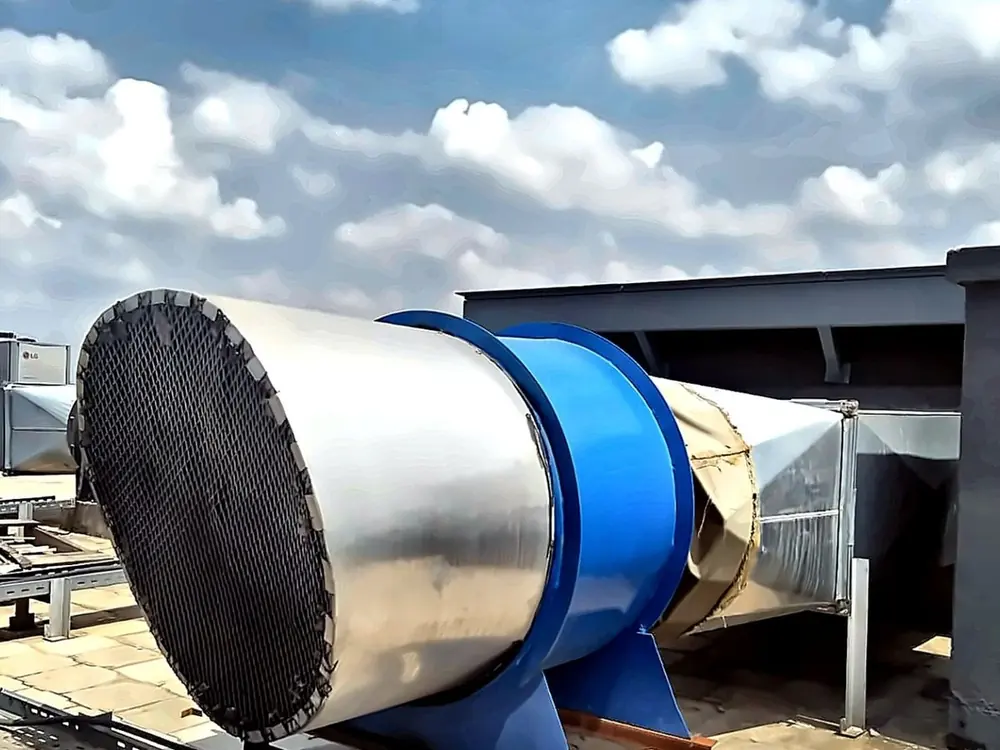
Fan and duct sizing is matched to the heat and contaminant load of the cooking line rather than a fixed figure — an oversized system wastes energy and creates noise, while an undersized one fails to clear heat and fumes effectively. Airflow planning also has to account for how extraction interacts with the rest of the building's ventilation, so the kitchen doesn't end up pulling air (and smells) from adjoining spaces in ways that weren't intended.
Make-Up & Fresh Air
Extraction removes air from the kitchen, and that air has to be replaced — without adequate make-up or fresh air supply, extraction fans struggle to perform, doors become hard to open, and outside air gets pulled in through uncontrolled gaps. A balanced design sizes fresh air supply to match extraction volume, filtering incoming air and, in some layouts, tempering it before it reaches the kitchen. This is planned together with extraction, not bolted on afterward.
Discharge Considerations
Where exhausted air is discharged matters. Discharge points are sited to avoid re-entrainment — exhaust air being pulled back into fresh air intakes, windows or neighbouring properties — and to keep grease-laden air away from occupied outdoor areas. This is a design decision made early, since it affects duct routing and fan location as much as the equipment specification does.
Kitchen Layout & Noise Considerations
Kitchen layout affects where extraction and make-up air can practically be routed, and changes to layout after a system is designed often mean re-working ductwork. Noise is a related consideration — larger centrifugal fans can be intrusive in occupied spaces, so fan selection, location and acoustic treatment of ductwork are considered where the kitchen sits close to dining areas, offices or guest rooms.
Maintenance & Cleaning
Grease filters need regular cleaning, and full duct grease cleaning is needed periodically — how often depends on cooking intensity, grease loading, system condition and the operating environment, so intervals vary between a light-use office kitchen and a high-volume commercial kitchen. As a general planning reference, filter cleaning weekly to monthly and duct cleaning roughly every 3–12 months is common in busy commercial kitchens, but the appropriate schedule for your kitchen should be set from its actual cooking volume and risk category, and confirmed against applicable maintenance procedures rather than treated as a fixed rule. Fan and motor inspection and discharge point checks are part of a routine maintenance plan. Regular cleaning is one of the main ways commercial kitchens manage the fire risk that grease-laden ductwork can otherwise create.
What Kitchen Extraction Planning Needs to Address
These are the considerations that shape a properly designed system.
Cooking equipment type and volume set the extraction requirement.
Source capture depends on hood placement over the cooking line.
Baffle or mesh filters reduce fire risk and duct fouling.
Stainless or coated ducting withstands grease and moisture.
Matched to heat and contaminant load, not a fixed figure.
Fresh air supply balanced against extraction volume.
Sited to avoid re-entrainment into intakes or occupied areas.
Equipment position affects practical duct and hood routing.
Fan selection and acoustic treatment near occupied spaces.
Duct access panels for filter and grease-cleaning maintenance.
Filtration and cleaning intervals reduce grease-fire risk.
Airflow balancing and performance checks on every project.
Why Professional Design Matters
Kitchen extraction and ventilation is a system, not a single piece of equipment — the canopy, ductwork, fan, discharge point and make-up air supply all have to work together, sized to the specific cooking line and building. Extraction and fresh air are best designed together rather than in isolation, since undersizing one undermines the other.
We don't claim to certify compliance with every applicable building, fire or health code — those requirements vary by county, building type and use, and should be confirmed with the relevant authority for your project. What we can offer is sound engineering design: sizing extraction and make-up air to the actual load, specifying grease filtration and fire-rated ducting where the application calls for it, and building in the access needed for ongoing cleaning and maintenance.
When to Bring In an HVAC/Ventilation Contractor
Involve a ventilation contractor early — ideally during kitchen layout planning, not after equipment is installed and the extraction is an afterthought. This is especially true for new-build kitchens, major refurbishments, or any kitchen where cooking equipment, seating capacity or the building's use is changing, since all of these affect the heat and contaminant load the system needs to handle.
Explore Frosten's ventilation & HVAC services
Kitchen extraction, industrial ducting and fresh-air handling systems. Visit Ventilation →
Cold rooms, walk-in coolers and refrigeration equipment for Kenyan businesses. Visit Refrigeration →
VRF/VRV, ducted and split systems for residential, commercial and industrial buildings. Visit HVAC →
More from Frosten's Guides
Cold Room Installation Cost in Kenya
What drives cold room installation cost in Kenya — size, temperature, insulation and refrigeration system — and how to compare quotations.
AC Installation Cost in Nairobi
What drives AC installation cost in Nairobi and Kenya, and how Frosten prices split, ducted and VRF/VRV installation projects.
Commercial Refrigerator Buying Guide for Kenyan Businesses
How to evaluate commercial refrigeration equipment before you buy, for restaurants, hotels and commercial kitchens.
Frequently Asked Questions
Why does a commercial kitchen need mechanical extraction?
Cooking produces heat, grease-laden air, fumes, moisture and odours that build up quickly in an enclosed kitchen. Mechanical extraction captures these at source, at the cooking line, reducing fire risk, protecting working conditions and preventing heat and smells from spreading into dining areas or neighbouring spaces.
Do I need make-up air alongside extraction?
Yes. Extraction removes air from the kitchen, and that air has to be replaced. Without adequate make-up or fresh air supply, extraction fans struggle to perform and outside air gets pulled in through uncontrolled gaps. Extraction and make-up air are best designed together.
How often does kitchen extraction ductwork need cleaning?
It depends on cooking intensity, grease loading and risk category rather than a fixed schedule. As a general planning reference, grease filter cleaning weekly to monthly and full duct cleaning roughly every 3–12 months is common in busy commercial kitchens, but the right interval for your kitchen should be confirmed against its actual cooking volume and applicable maintenance procedures.
What determines the size of a kitchen extraction system?
Fan and duct sizing is matched to the heat and contaminant load of the cooking line — equipment type, cooking volume and canopy coverage — rather than a fixed figure. An oversized system wastes energy and creates noise; an undersized one fails to clear heat and fumes effectively.
Are there legal requirements for kitchen extraction in Kenya?
Requirements can vary by county, building type and use, so specific legal or code requirements should be confirmed with the relevant authority for your project. What we can offer is sound engineering design — sizing extraction and make-up air correctly, and specifying grease filtration and fire-rated ducting where the application calls for it.
When should I involve a ventilation contractor?
As early as possible — ideally during kitchen layout planning rather than after equipment is installed. This matters most for new-build kitchens, major refurbishments, or any change to cooking equipment or seating capacity that affects the heat and contaminant load.
Planning a commercial kitchen extraction system?
Frosten Energy Solutions can assess your kitchen layout and cooking line and design an extraction and make-up air system to suit.
Request Quotation